
Why Does My Cat Have Scabs Around the Neck and Face?
When a cat has scabs around the neck and face, the most likely cause is an allergic reaction, with flea allergies at the top of the list, followed by food and environmental allergies. Other possible causes include ear mites, fungal infections like ringworm, bite wounds from other cats, stress-related overgrooming, and, less often, sun damage or skin cancer. Because so many conditions look alike, a veterinary exam is the most reliable way to find the source and stop the itch-scratch cycle.
Many owners first discover the problem while petting their cat and feeling tiny, gritty bumps under the fur. Others spot raw patches near the ears or chin after a bout of scratching. If you find yourself asking, “Why does my cat have scabs around neck and face?” you’re far from alone. At Keystone Animal Hospital in Bradenton, FL, this is one of the most common skin concerns cat owners bring to us. Below, we explore why a cat may have scabs around the neck and face, how fleas fit into the picture, how veterinarians sort out the cause, and which signs mean your cat should be seen soon.
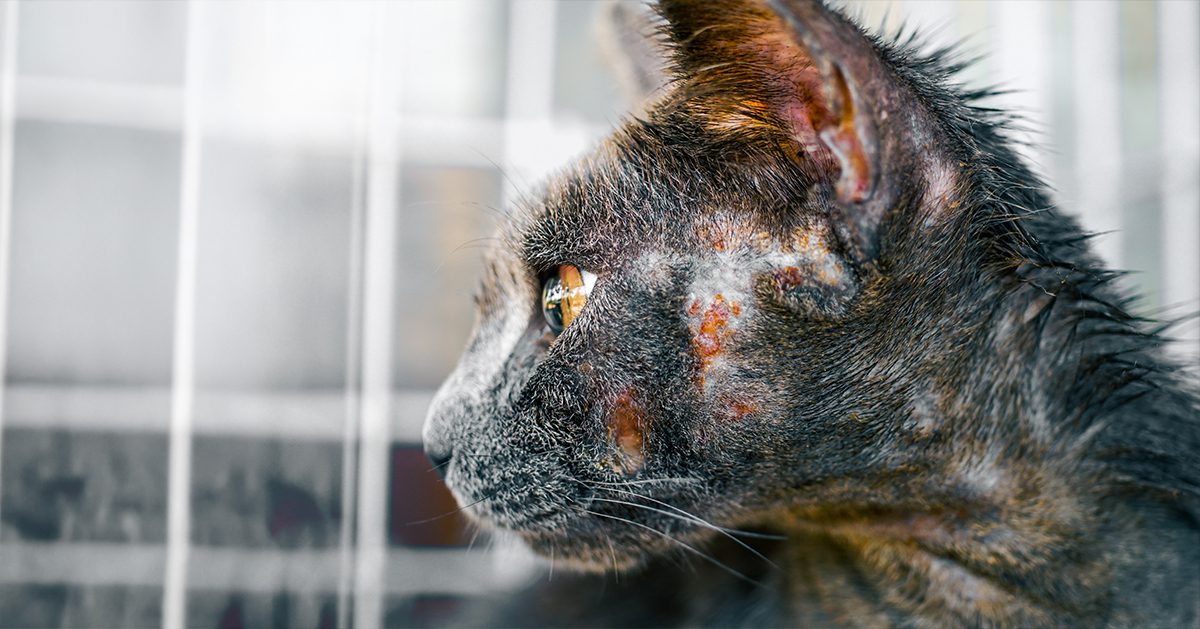
What Causes Scabs on a Cat’s Neck and Face?
Scabs in this area usually form after a cat scratches itchy skin with its back feet, so the real question is what’s causing the itch in the first place.
The head and neck are easy targets for a cat’s back claws, which explains why this area takes so much damage. When a cat has scabs around the neck and face, the pattern itself offers clues. Scabs concentrated near the ears may point to mites, crusts along the chin may suggest acne, and bumps scattered down the neck and back often lean toward allergies.
Allergies Lead the List
Allergies trigger more head and neck scabbing than any other cause. A cat with a flea, food, or environmental allergy often develops a rash of small, crusty bumps that veterinarians call miliary dermatitis, because the texture resembles millet seeds scattered across the skin. If your cat has scabs around the neck and face along with hair loss or redness, an allergy is a strong possibility.
Other Common Culprits
Several other conditions can create a similar look. Your veterinarian will consider possibilities such as:
- Ear mites: These parasites cause intense ear itching, and cats often scratch the surrounding face and neck raw
- Ringworm: A contagious fungal infection that can produce circular, scaly, crusty patches
- Fight wounds: Bites and scratches from other cats can scab over or form painful abscesses
- Feline acne: Blackheads and crusts that typically appear on the chin and lips
- Eosinophilic lesions: Raised, inflamed sores linked to an overactive immune response
- Sun damage: White or light-colored cats can develop crusty sores on the ear tips, nose, and eyelids
Stress and Overgrooming
Sometimes a cat has scabs around the neck and face because of behavior rather than disease. Some cats scratch or groom excessively when they feel anxious, especially after a move, a new pet, or a change in routine. Veterinarians usually consider stress only after ruling out medical causes, since itchy skin can also make a cat appear anxious.
Could Fleas Be Causing My Cat’s Scabs?
Yes, fleas are one of the most frequent reasons a cat has scabs around the neck and face, even in cats that never seem to have fleas.
Why You Might Not See Any Fleas
Cats are meticulous groomers, and they often swallow fleas before an owner ever notices them. For a cat with flea allergy dermatitis, a single bite can cause itching that lasts for days. That means a cat can carry very few fleas and still have a significant skin reaction. Small black specks in the fur, known as flea dirt, may be the only visible clue. Parting the fur near the base of the tail or along the neck is often where these specks show up first.
Indoor Cats Are Not Immune
Many owners assume an indoor cat can’t get fleas, but fleas easily travel inside on clothing, shoes, dogs, and even mice. In Bradenton’s warm and humid climate, fleas remain active through every season, so indoor cats face year-round exposure. When an indoor-only cat has scabs around the neck and face, fleas still belong on the list of suspects.
How Prevention Fits In
Consistent, veterinarian-recommended flea prevention for every pet in the household is the foundation of managing flea-related scabbing. Never use a dog flea product on a cat, as some ingredients are highly toxic to felines. Your veterinarian can recommend a safe option based on your cat’s age, weight, and health history. If your cat has scabs around the neck and face and isn’t on a monthly preventive, that conversation is a smart place to start.
How Do Veterinarians Diagnose Scabs on the Head and Neck?
Finding out why a cat has scabs around the neck and face usually takes a step-by-step process, since many skin problems look almost identical on the surface.
The Exam and Basic Tests
Your veterinarian will start with a detailed history, including your cat’s diet, lifestyle, other pets in the home, and when the scabs first appeared. A hands-on exam helps reveal where the crusts are concentrated and whether other areas are affected. Depending on what your veterinarian finds, the visit may include:
- Flea combing to check for fleas or flea dirt
- An ear swab to look for mites or yeast under the microscope
- Skin scrapings to rule out other types of mites
- Tape or impression cytology to check for bacterial or yeast infections
- A fungal culture or ultraviolet light exam for ringworm
Narrowing Down Allergies
If parasites and infections are ruled out, your veterinarian may recommend strict flea control followed by a prescription elimination diet trial to check for food allergies. When a cat still has scabs around the neck and face after those steps, environmental allergies become more likely. In some cases, a biopsy may be recommended, especially for sores that don’t heal or that change in size or appearance.
Why Home Remedies Can Backfire
Applying human creams, essential oils, or over-the-counter sprays can irritate the skin further, and some products are toxic to cats if licked. A proper diagnosis allows your veterinarian to prescribe treatment that targets the actual cause.
When Should I Be Concerned About My Cat’s Scabs?
A single small scab that heals within a few days usually isn’t cause for alarm, even when a cat has scabs around the neck and face from time to time, but certain patterns call for prompt veterinary attention.
Signs That Warrant a Visit
Schedule an appointment if your cat has scabs around the neck and face that last longer than a week, keep returning, or spread to new areas. You should also call your veterinarian if you notice swelling, discharge, or a foul odor, which may signal an infection or abscess. Constant scratching that leaves open wounds needs attention, too, since broken skin can become infected quickly.
Changes That Need Faster Attention
Sores that bleed easily, refuse to heal, or slowly grow larger should be checked without delay, especially on white-furred cats with frequent sun exposure. Contact your veterinarian promptly if skin problems come with lethargy, fever, loss of appetite, or hiding. If ringworm is a possibility, schedule an exam soon, since this fungal infection can spread to people and other pets in the home.
Waiting to see whether scabs clear up on their own can allow a minor problem to become a bigger one. Early care often means faster relief, fewer complications, and a shorter road back to healthy skin for your cat.
Schedule a Skin Check for Your Cat in Bradenton
Still asking, “Why does my cat have scabs around neck and face?” You don’t have to guess at the cause or work through trial and error on your own. A thorough exam can pinpoint the trigger, whether it’s fleas, allergies, mites, an infection, or something that needs a closer look.
Our veterinary team at Keystone Animal Hospital helps Bradenton cat owners diagnose skin problems, relieve uncomfortable itching, and build prevention plans that keep flare-ups from returning. To book an appointment for your cat, call us at (941) 741-8445. We look forward to helping your cat feel comfortable and look healthy again.