
Why Is My Cat Overgrooming? Allergies and Other Possible Causes
Cat overgrooming is usually a sign of itchy skin, with allergies to fleas, food, or environmental triggers being the most common cause. Pain, skin infections, parasites, and stress can also push a cat to lick, chew, or pull out its fur far more than normal. Because the behavior looks the same no matter what triggers it, a veterinary exam is the best way to uncover the real reason behind it.
Grooming is a healthy, natural part of every cat’s day, so it can be hard to tell when routine care has crossed the line. Many owners only notice a problem when they spot thinning fur, a bald belly, or a patch of skin that looks red and irritated. At Keystone Animal Hospital in Bradenton, FL, we often help cat owners solve this puzzle. In this blog, we explain what excessive grooming looks like, why cats fixate on one area, how allergies play a role, and when stress might be the hidden driver.
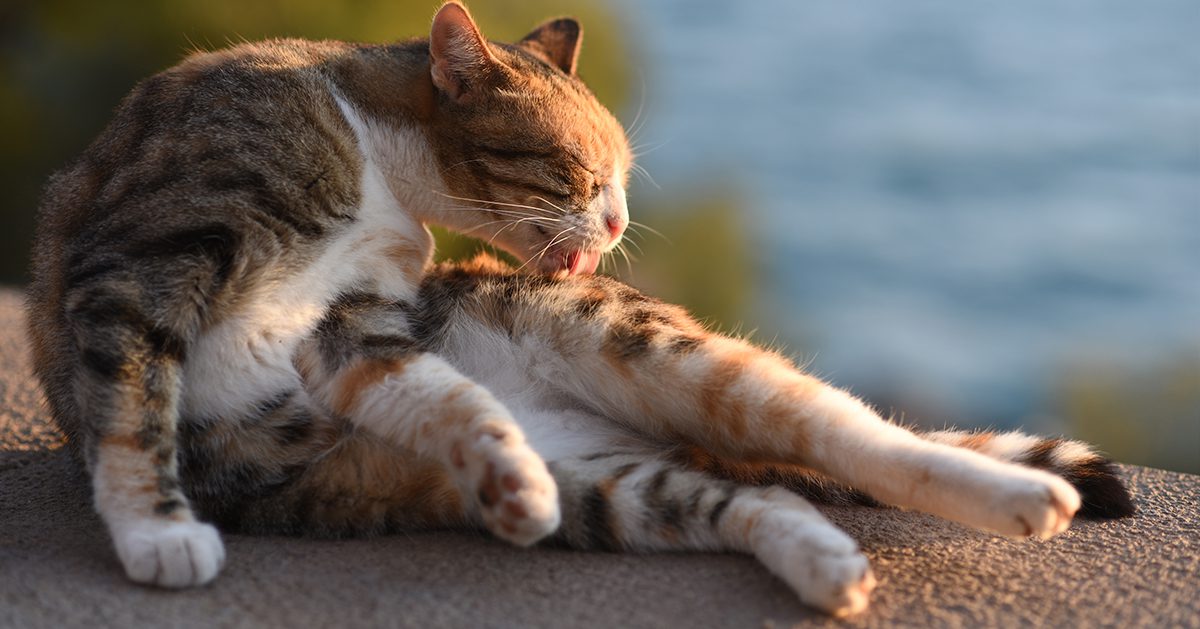
What Does Cat Overgrooming Look Like?
Healthy cats spend a surprising amount of time grooming, often 30 to 50 percent of their waking hours, so the key is noticing a change from your cat’s usual habits.
Telltale Signs of Excessive Grooming
Cat overgrooming tends to leave physical evidence, even if you never catch your cat in the act. Look for:
- Thin fur or bald patches, especially on the belly, inner thighs, flanks, or front legs
- Short, stubbly hair that feels coarse, a sign the fur is being chewed off rather than falling out
- Red, irritated, or scabbed skin in frequently licked spots
- More hairballs than usual, or clumps of fur around the house
- Grooming sessions that interrupt eating, playing, or sleeping
Why It Often Goes Unnoticed
Cat overgrooming can be surprisingly easy to miss. Many cats prefer to groom in private, such as under a bed or in a quiet room. Some owners assume their cat is simply shedding heavily, when the fur is actually being pulled out. If your cat’s coat looks different than it did a few months ago, it’s worth looking more closely. Run your hand along the belly and inner legs, since these areas often show changes first. Taking a few photos over several weeks can also help you and your veterinarian see whether the hair loss is spreading or holding steady.
Why Is My Cat Licking the Same Spot Repeatedly?
When a cat focuses on one specific area, the location often offers an important clue about what’s going on underneath.
Pain and Discomfort
Cats are experts at hiding pain, and licking is sometimes one of the few outward signs. A cat with arthritis may lick over a sore hip, knee, or wrist. Cats with bladder inflammation, a condition called feline idiopathic cystitis, sometimes lick the lower belly until it’s bare. Repeated licking near the tail can point to anal gland discomfort.
Pain-related cat overgrooming is especially common in senior cats, who may not show obvious limping or stiffness. Other subtle hints include reluctance to jump onto furniture, changes in litter box habits, or sleeping in new, easier-to-reach spots. If your older cat suddenly starts licking one joint or area, mention these changes to your veterinarian, since they can help connect the dots.
Localized Skin Problems
Focused cat overgrooming can also stem from a problem in the skin itself. Common causes your veterinarian may investigate include:
- A healing wound, insect bite, or hidden abscess from a scuffle with another cat
- Bacterial or yeast infections that create persistent itching
- Ringworm, a fungal infection that can cause patchy hair loss
- Mites or other external parasites
- A lump, cyst, or growth that feels irritating to the cat
Spot licking that lasts more than a few days deserves professional attention. What starts as a minor irritation can turn into an open sore when a cat’s rough tongue works the same area over and over. Avoid placing ointments, sprays, or bandages on the spot without veterinary guidance, since cats may lick off and swallow whatever is applied.
Can Allergies Cause Overgrooming in Cats?
Yes, allergies are among the leading medical reasons for cat overgrooming, and they often cause licking across larger areas of the body rather than a single spot.
Flea Allergies
For allergic cats, a single flea bite can set off days of intense itching. Because cats groom so thoroughly, they often remove fleas before an owner ever sees them, which makes flea allergy easy to overlook. Fleas thrive year-round in Bradenton’s warm climate, so even indoor cats benefit from consistent, veterinarian-recommended prevention.
Food and Environmental Allergies
Cat overgrooming linked to food or environmental allergies can look nearly identical. Some cats react to a protein in their diet, such as chicken, beef, or fish. Others are sensitive to dust mites, mold, or pollen. Both types can cause a cat to lick its belly and legs, scratch its head and neck, or develop small, crusty bumps across the skin. Diagnosing food allergies typically involves a prescription elimination diet trial lasting eight weeks or more, while environmental allergies are often identified after other causes have been ruled out.
Why Allergies Rarely Go Away on Their Own
Allergic cat overgrooming tends to persist or worsen until the underlying trigger is addressed. Constant licking can also break the skin and invite secondary infections, which add even more itch. Your veterinarian can recommend a treatment plan that may include parasite control, diet changes, and prescription medications to bring your cat relief. Avoid giving antihistamines or other human medications without veterinary approval, as some are dangerous for cats.
Could Stress or Behavior Be the Cause?
Sometimes cat overgrooming has an emotional root, a condition veterinarians call psychogenic alopecia.
Common Stress Triggers for Cats
Grooming releases feel-good chemicals that help cats calm themselves, which is why stress-driven cat overgrooming can become a hard habit to break. Some anxious cats groom compulsively because the behavior offers short-term comfort. Changes that may spark this behavior include:
- Moving to a new home or rearranging furniture
- A new baby, roommate, or pet in the household
- Conflict with another cat, including outdoor cats seen through windows
- Changes in a family member’s work schedule
- Boredom from limited play or environmental enrichment
Why Medical Causes Come First
Behavioral overgrooming is considered a diagnosis of exclusion, which means veterinarians rule out allergies, parasites, pain, and infections before concluding that stress is to blame. Studies have found that many cats initially thought to have stress-related hair loss actually had an underlying medical condition, most often allergies. A thorough exam, skin testing, and a careful look at your cat’s history help your veterinarian reach the right answer. Sharing details such as when the licking started, where it happens most, and any recent changes at home can speed up the process considerably. If stress does turn out to be the main factor behind the excessive licking, your veterinarian can discuss environmental changes and, when appropriate, behavioral therapies to help your cat feel more secure.
Help for Cats Who Can’t Stop Grooming in Bradenton
Cat overgrooming is your pet’s way of telling you something isn’t right, whether the cause is an allergy, a hidden source of pain, a skin infection, or stress. The sooner you identify the trigger, the sooner your cat’s coat and comfort can begin to recover.
Keystone Animal Hospital offers complete care for cats with excessive licking and hair loss. Our Bradenton veterinarians pinpoint the cause through a careful exam and focused testing, then design a treatment plan around your cat’s specific needs. If you’ve spotted bare patches, sore-looking skin, or grooming that’s out of the ordinary, call us at (941) 741-8445 to schedule a visit.