
Why is My Dog’s Skin Red?
Red, irritated skin on your dog is often a sign that something is wrong. Dog skin redness can result from allergies, infections, parasites, or environmental irritants, and the sooner it’s addressed, the more comfortable your pet will be. If you’ve been asking yourself, “Why is my dog’s skin red?”, this guide will help you understand the most common causes and what steps to take next.
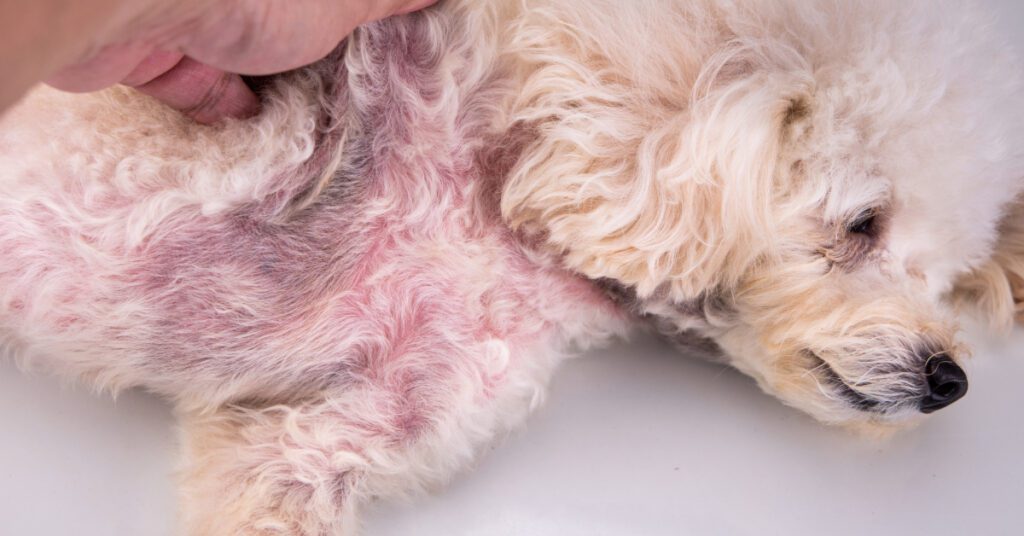
What Are the Causes of Red Skin in Dogs?
There are many reasons a dog’s skin can become red and inflamed. Some causes are mild and easy to address, while others require veterinary diagnosis and treatment.
Allergies
Dogs can be allergic to foods, environmental substances like pollen or dust mites, or contact allergens like grass and certain cleaning products. When dogs with allergies are exposed to their triggers, the immune system releases histamine, which causes red, itchy, inflamed skin. This condition is called allergic dermatitis, and it’s one of the most frequently seen skin problems in veterinary practice.
Signs that red skin in dogs may be related to allergies include:
- Redness and itching concentrated around the paws, belly, groin, ears, and face
- Recurrent skin infections
- Seasonal flare-ups that worsen during spring or fall
- Hair loss in affected areas from excessive scratching or licking
Fleas and Parasites
When a flea bites a dog that is allergic to flea saliva, the skin can become intensely red, itchy, and inflamed, even from just one or two bites. You may notice redness and hair loss at the base of the tail or along the back, which are classic signs of flea allergy in dogs.
Other parasites, including mites (which cause mange), lice, and ticks, can also cause red skin in dogs. If you wonder, “Why is my dog’s skin red?” and they are scratching persistently, a parasite-related cause should always be ruled out during a veterinary examination.
Bacterial and Fungal Skin Infections
Red, irritated skin in dogs can also be caused by bacterial infections (pyoderma) or fungal infections like ringworm or yeast overgrowth. These infections often develop secondary to another issue, such as an allergy or an injury that compromises the skin barrier. Infected skin may appear red and crusty, develop pustules or sores, and have an unpleasant odor. Yeast infections, in particular, tend to occur in warm, moist areas like the ears, armpits, and skin folds.
Contact Irritants and Environmental Factors
Dogs that spend time outdoors may develop red skin from direct contact with irritating substances such as fertilizers, pesticides, road salt, or certain plants. Even household products like floor cleaners or laundry detergent residue on bedding can cause a dog’s skin to become red and irritated. Contact dermatitis typically appears on areas of the body with less fur coverage, including the belly, paws, and inner thighs.
Hot Spots
Hot spots (also called acute moist dermatitis) are localized areas of red, moist, inflamed skin that develop rapidly. They are often triggered by scratching, licking, or biting at an area due to another underlying irritation, such as allergies or a bug bite. Hot spots can grow quickly and become quite painful. If you notice a red, wet patch on your dog’s skin that seems to be spreading, veterinary attention is recommended.
Hormonal Imbalances
Conditions like hypothyroidism and Cushing’s disease can affect the skin’s health and cause generalized redness, dryness, hair loss, and increased susceptibility to infections. If your dog has red skin along with unexplained weight changes, lethargy, or changes in coat quality, hormonal testing may be recommended by your veterinarian.
What Do I Do If My Dog Has Red and Irritated Skin?
If your dog’s skin is red and irritated, the most important step is to schedule a veterinary appointment at Keystone Animal Hospital. Your veterinarian can examine the skin, identify the underlying cause, and recommend the most effective treatment. Trying to manage red skin in dogs without a diagnosis can delay proper care and allow the condition to worsen.
What to Expect at a Veterinary Visit for Skin Redness
When you bring your dog to Keystone Animal Hospital in Bradenton, FL for red or irritated skin, our veterinary team will perform a thorough physical examination of the skin and coat. Depending on what is found, additional diagnostics may include:
- Skin scraping or cytology to check for mites, bacteria, or yeast
- Allergy testing or a dietary elimination trial to identify food or environmental allergies
- Blood work to rule out hormonal or systemic causes
- Culture and sensitivity testing if a bacterial infection is suspected
Treatment for red skin in dogs varies based on the diagnosis. Your veterinarian may prescribe medicated shampoos, topical treatments, oral medications, or dietary changes to address the root cause and relieve your dog’s discomfort.
Preventing Skin Redness in Dogs
While not all causes of red skin in dogs can be prevented, regular grooming, year-round flea prevention, a high-quality diet, and routine veterinary checkups go a long way in maintaining healthy skin and catching problems early. If your dog has a known allergy, working with your vet to minimize exposure to triggers can significantly reduce flare-ups.
Give Your Dog’s Skin the Attention It Deserves
Red skin in dogs is a signal that something needs attention. Whether it’s a mild irritation or a sign of a more complex condition like allergic dermatitis or a skin infection, prompt veterinary evaluation is the best path forward. Our team at Keystone Animal Hospital in Bradenton, FL is here to help you get to the bottom of your dog’s skin issues and develop a treatment plan that works for your pet. Don’t wait for red, irritated skin to worsen. Call us at (941) 741-8445 or request an appointment online today and get your dog on the path to relief.